

Strategy.mil | The U.S. Army's Strategic Management System

Strategy.mil: The U.S. Army's Strategic Management System

Strategy.mil is the U.S. Army's system of record for performance management, powered by Spider Impact. It puts strategy, performance, and reporting in one place, and it collects and owns the data it runs on, so every level of your command knows the plan and how it's performing.

Overview of Strategy.mil, the U.S. Army's Strategic Management System
Trusted across industry, government, and nonprofit

One System to Execute Strategy and Own Your Data

Strategy.mil is the only Army system built around strategy execution, and a true system of record for your data. Licensed enterprise-wide, every new use adds capability at no extra cost.

Execute Strategy Across Every Command

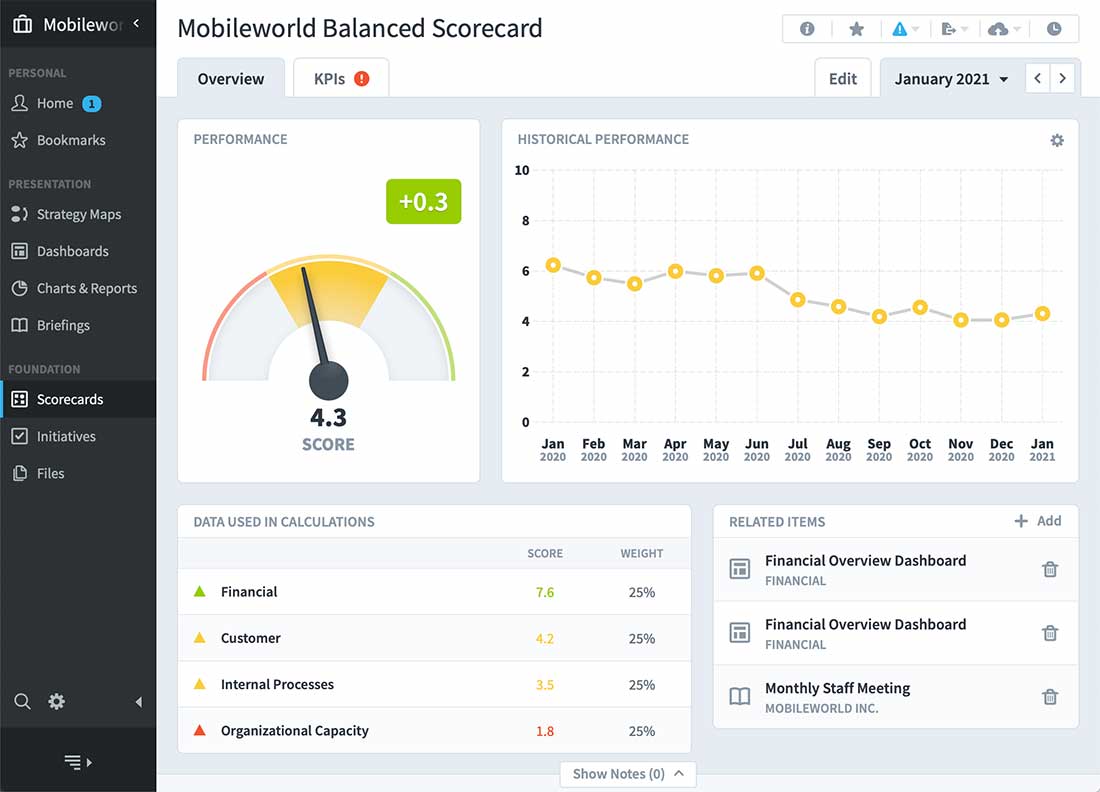
Great strategy gets lost on the way down the chain of command. Strategy.mil communicates the plan to every level, then rolls performance up the tree so leaders see execution at a glance.

Become Your System of Record

Strategy.mil collects, validates, and owns your data, including PII, instead of just displaying what other systems hold. It becomes the authoritative source where none exists, and can replace aging legacy systems.

Modernize Without Standing Up New Software

A low-code, no-code platform with built-in AI lets non-technical admins respond to new requirements in days, not months. The U.S. Army SHARP program retired a legacy system this way, saving $1.2M a year.

Communicate Strategy Down, Roll Performance Up

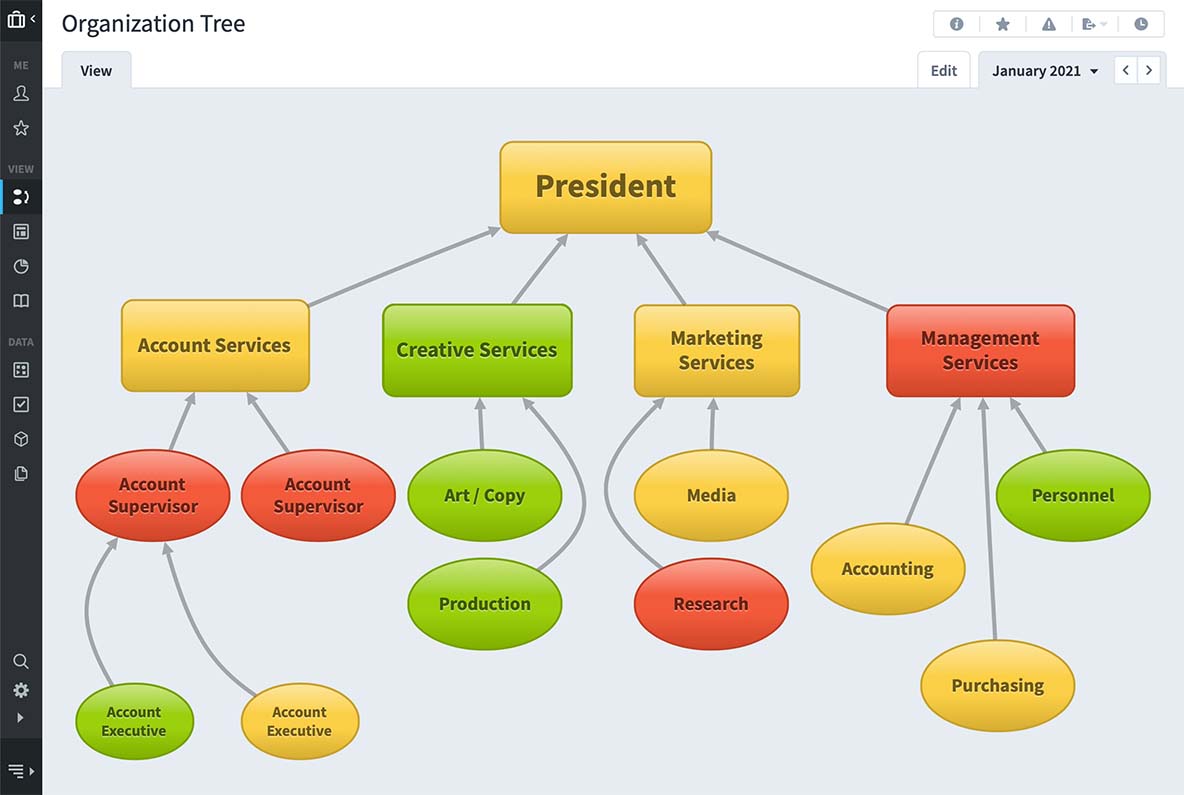
Leaders set great strategy, but it fades as it moves down the chain of command. At the lower levels, people don't know the big picture, how well it's working, or how they fit in. Strategy.mil breaks strategy into measurable KPIs, then rolls weighted scores up the tree. Commanders see exactly how it's progressing, command by command.

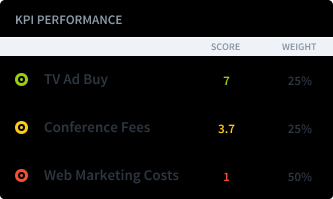
Automate Your Balanced Scorecard KPI Performance Widget

Collect and Own Your Data, Even PII

Strategy.mil doesn't just display data from other systems. It collects data through no-code Forms and Apps, validates it on entry, and owns it outright — even sensitive PII. Some data has no other home at all, like suicide tracking, so it lives in Strategy.mil itself. Data-quality reports catch missing, invalid, or out-of-range values — an age over 100, a date before 1900 — so bad records get cleaned before they ever reach leadership.

An app showing a list of records

Brief Leadership With Live Data

Briefings are often the first thing a new organization builds. Take a senior leader's existing PowerPoint and rebuild it in Strategy.mil, slide for slide. The only difference is that every number stays current on its own, with no manual updates. Drill into any figure mid-briefing, then pick up right where you left off. Export cleanly to PowerPoint, or schedule the deck to send itself every week, month, or quarter, saving thousands of person-hours a cycle.

Operate on Both Classified and Unclassified Networks

Strategy.mil can run on both the NIPRNet (unclassified) and SIPRNet (classified) at once. On the unclassified side, you see the unclassified part of your data, and it flags when classified data exists that you can't see — so you never mistake a partial picture for the full one. On the classified side, you see the whole picture, with the classified data layered on top.

Auditing the security of a business intelligence dataset

Replace Legacy Systems With No-Code Apps

Bundle screens into standalone Apps, each with its own URL and branding, built for a specific job, like tracking harassment, suicide, or family advocacy. Non-technical admins build and change them in minutes, and most go from idea to production in days. The Army did exactly this with ICRS, its legacy harm-tracking system, rebuilt as a no-code App inside Strategy.mil. That saved the SHARP program $1.2 million a year, with faster search and reporting across large case datasets. Read the full story in the SHARP case study.

An example app showing what Apps can be created
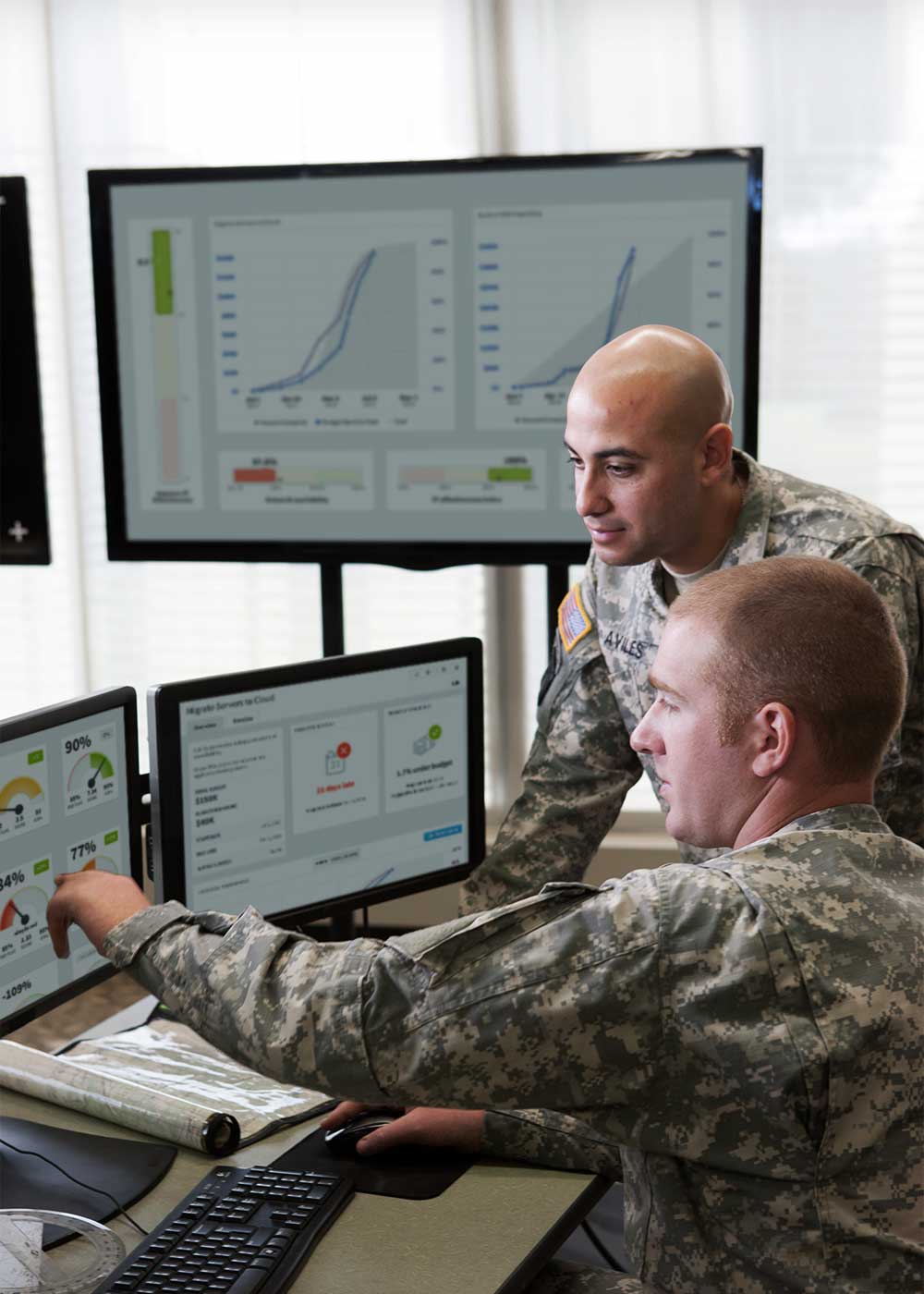
Two military men looking at performance management software on several computer monitors
Ornament pattern

U.S. Army Uses Spider Impact to Provide a Transparent Common Operating Picture

SMS data, dashboards, and performance trends provide an enterprise-wide, transparent Common Operating Picture that serves as a continuous feedback loop and azimuth check to help answer the questions: ‘Are we doing the right things?’ and ‘Are we doing things right?’

Gaston Randolph Director of Strategy Management, Office of the Surgeon General
Read the US Army Story

One System for Your Entire Command

From the Secretary of the Army down to an individual unit, Strategy.mil puts strategy, data, and reporting in one place, so everyone knows the plan and how it's performing.

Goals, Colors, and Scores Make Everything Comparable

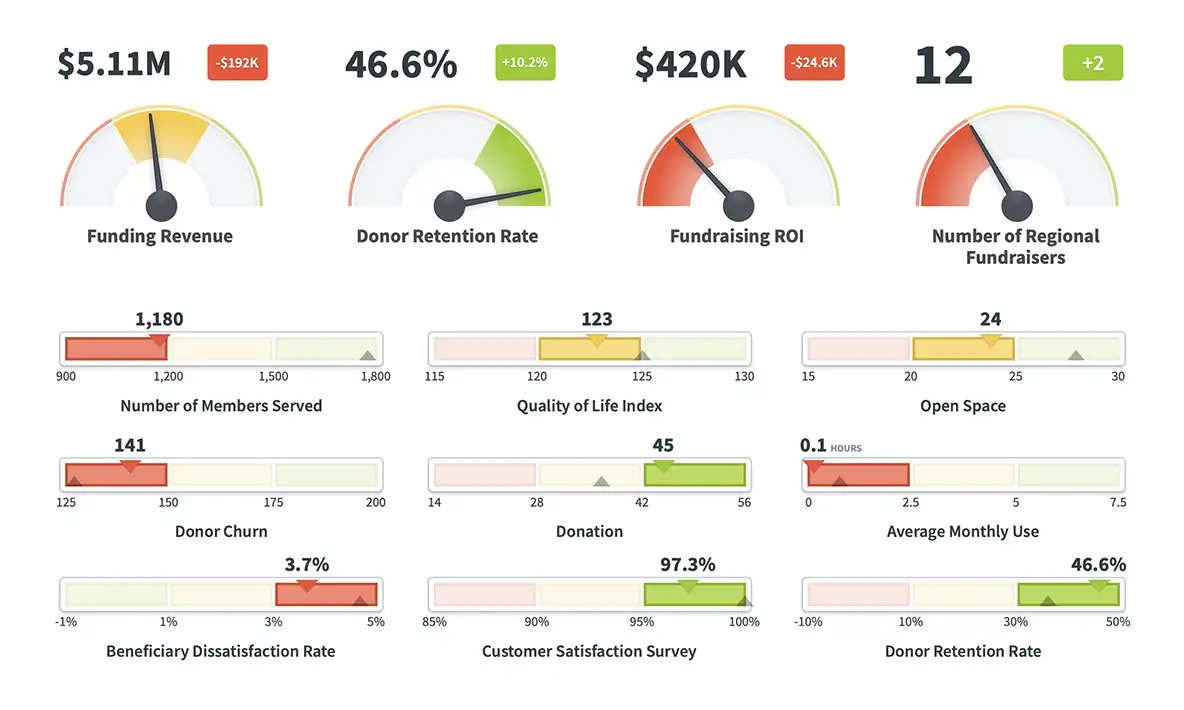
Strategy.mil scores performance against the goals you set, turning every metric into a color and a normalized score. Now you can compare very different metrics on one scale, watch performance over time, and see at a glance what's on track and what needs attention.

Gauge visualizations

See How Every Command Fits the Big Picture

Strategy.mil gives Army leadership a single Common Operating Picture, one shared view across dozens of commands and interagency partners. Drill from the enterprise all the way down to a single unit, with no tools to switch and no spreadsheets to stitch together. Now leadership debates one set of numbers instead of reconciling competing reports.

Strategic Roles And Contribution

Get Alerts and Launch Initiatives That Actually Move Performance

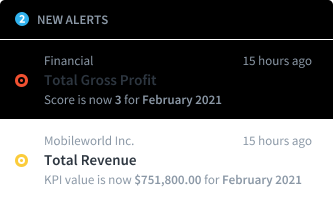
Set acceptable ranges and let Strategy.mil watch your metrics for you. The moment a KPI slips out of range, its owner gets an alert and a prompt to launch an Initiative to fix it. Then Strategy.mil tells you whether that Initiative is actually moving performance, and predicts whether it will land on time and on budget.

Roll Up Instantly by UIC

Strategy.mil uses roll-up trees for instant aggregation and access control. The most important is the UIC tree (Unit Identification Code). Any dataset with a UIC field rolls up on its own. Give someone a role at a UIC and they instantly see that unit and everything below it — and nothing else. A live feed from the Army's system of record keeps the tree current. Installation, geography, and other trees work the same way.

Strategic Roles And Contribution KPI Dashboard Alerts Widget

Ask Questions and Get Instant Answers

Impact Assistant lets anyone explore Strategy.mil by asking plain-English questions like "Which commands are red this quarter?" or "Show me incident trends by installation." You get immediate charts and answers. It remembers conversation context for natural follow-ups, and it can even help you learn the software, making the data accessible to everyone, no technical skills required.

Built-In Security for Defense

Permissions are group-based and tied to the UIC tree, so each user sees only the records they're cleared for. Strategy.mil meets the standards defense organizations require, including FedRAMP and DoD authorization. It's the same software already running on classified military networks.

group permissions for security

Example Government KPIs for Strategy.mil

We've assembled sample Key Performance Indicators (KPIs) to use as a starting point when building scorecards in Strategy.mil.

View All Government KPIs
  • Number of enlisted Active Component accessions
  • Percentage of recruits holding high school diplomas
  • Acquisition cycle time
  • Percentage satisfied with the military health plan
  • Percentage of inadequate family housing units
  • Percentage of DoD budget spent on infrastructure

Available at No Cost to the U.S. Army

Strategy.mil is free to every member of the United States Army. Request access and get started — everything you need is on the site.

FAQs

What is Strategy.mil (SMS)?

Strategy.mil is the U.S. Army's Strategic Management System (SMS) and the enterprise system of record for performance management. It is powered by Spider Impact, the leading commercial strategy-execution software, and it is the only Army system purpose-built around strategy execution. It communicates strategy throughout an organization, shows everyone how they fit in, and scores performance against goals. Those scores roll up the UIC tree, so leaders see big-picture execution at a glance. It serves thousands of users across dozens of commands and interagency partners on both classified and unclassified networks.

Beyond strategy execution, Strategy.mil acts as your system of record. It collects and validates data through no-code Apps and Forms, runs live leadership Briefings, operates across classified and unclassified networks, and includes built-in AI, all under one permission model.

How much does Strategy.mil cost?

Strategy.mil is available at no cost to every member of the United States Army. It is licensed at the enterprise level, so any command or organization can adopt it, build new applications, and add new uses without paying extra. To get started, visit Strategy.mil on NIPRNet, where you'll find everything you need to request access.

Why can't we just use Vantage?

Vantage and Strategy.mil are complementary, and they do overlap. Both pull in data from other systems and visualize it well. Where each one shines, though, is different.

Vantage, powered by Palantir, is built for massive scale and deep analytics. It's the right tool when your data reaches hundreds of millions (or more) of records, or when you need to surface patterns hidden deep in it.

Strategy.mil is built to be your system of record, something Vantage can't be. It doesn't just aggregate data — it collects and owns it, even PII. As a no-code platform, it can stand up a new system of record where none exists, or replace a legacy one. It also executes strategy with goals and scores, and runs live leadership Briefings, comfortably handling tens of millions of records or fewer. The two have different strengths, and they work well side by side.

How secure is Strategy.mil?

Security is built in. Access is controlled by group-based permissions tied to the UIC tree, so each person sees only the records they're authorized to access. Strategy.mil meets the standards defense organizations require, including FedRAMP Authorization and DoD Authorization, and the same software runs on the Army's classified networks.

What is Spider Impact, and how does it relate to Strategy.mil?

Spider Impact is the commercial strategy-execution software that powers Strategy.mil. It tracks three kinds of data — Scorecards that break strategy into measurable KPIs with goals, colors, and scores that roll up the tree; Initiatives that predict on-time and on-budget completion; and Datasets for low-level data and ad-hoc analysis. The same software that powers Strategy.mil on classified military networks is used by organizations worldwide. For U.S. Government, Defense, and National Security customers, Spider Impact for Government runs in a hosting environment that meets federal security standards.